

Conservatory Shutter Ideas for a Brighter Room

A conservatory can be the brightest room in the house, yet that is not always a benefit. Strong afternoon sun, overlooked boundaries and heat build-up can make a space that should feel relaxing harder to use. The right conservatory shutter ideas address those everyday frustrations without losing the airy character that made you choose a conservatory in the first place.
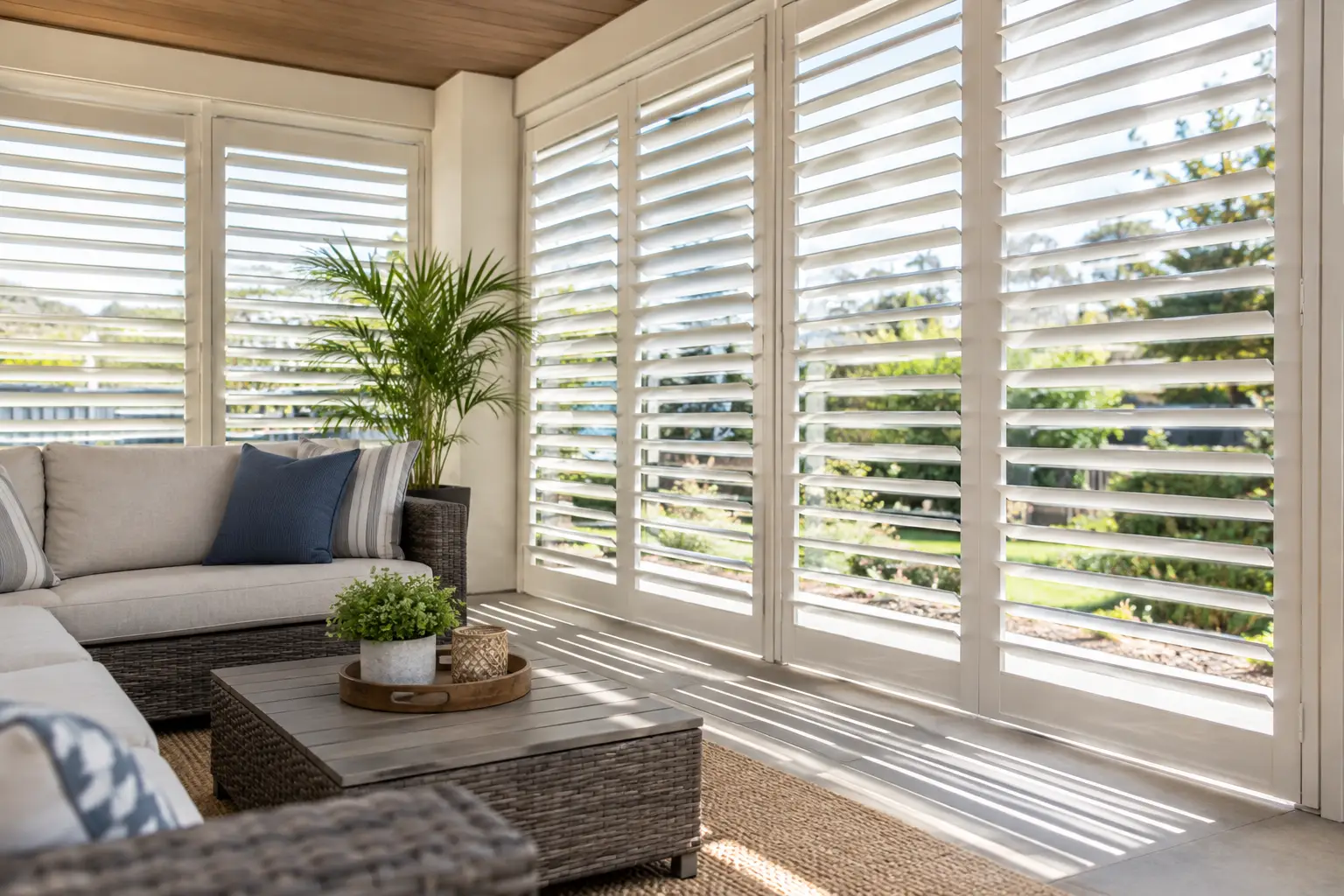
Made-to-measure shutters give you precise control over sunlight, privacy and the look of the room. Rather than covering the glass completely, adjustable louvres let you filter daylight, soften glare and retain a connection with the garden. The result is a more comfortable room that feels considered throughout the year.
Start with how you use the conservatory
The most successful shutter design begins with the room's purpose. A conservatory used for family meals needs a different approach from one that doubles as a home office, reading room or quiet place to enjoy the garden.
If the room is used most in the daytime, prioritise adjustable light control. Wider louvres can give a clean, contemporary appearance and allow plenty of light into the room when opened, while still providing effective screening when angled. In a conservatory that catches low evening sun, a layout that allows the upper section to remain open while the lower section is closed can be particularly useful.
Privacy matters too. Ground-floor conservatories are often visible from neighbouring homes, footpaths or gardens. Shutters allow you to angle the louvres towards the ceiling, admitting natural light while directing views away from the room. It is a more flexible solution than a window covering that is simply open or closed.
Think about the practical realities as well. Do you need easy access through French doors or patio doors? Is there furniture in front of the windows? Does the room become humid because it is filled with plants? These details influence the best panel configuration and material, which is why a careful survey is worth far more than choosing a style from a photograph alone.
Conservatory shutter ideas that work beautifully
Full-height shutters for a polished finish
Full-height shutters are often the natural choice for conservatory side windows and doors. They create a smart, balanced frame around the glazing and suit both modern extensions and more traditional homes. When fitted across a run of windows, the consistent lines make the whole room feel calmer and more purposeful.
A divider rail can be added part way up the panel. This separates the louvres into upper and lower sections, allowing each section to move independently. It is a practical feature as well as a design detail: close the lower louvres for privacy while keeping the upper part open for daylight and views of the sky.
For doors, panels can be configured to work around handles and opening directions. The aim should be to preserve day-to-day access to the garden, not create another obstacle between the house and outdoors.
Tier-on-tier shutters for flexible light and privacy
Tier-on-tier shutters are made as separate upper and lower panels. They are especially effective in overlooked conservatories, where complete privacy may be wanted at certain times but a bright, open upper half is still welcome.
During the day, you might leave the top tier open to bring in light and close the lower panels to reduce views from outside. In the evening, both sections can be closed for a more private, enclosed feeling. This flexibility makes tier-on-tier shutters a strong option for conservatories used as living spaces rather than occasional garden rooms.
They do have more panel lines than full-height shutters, so the finished look is slightly more detailed. In a simple, contemporary conservatory, full-height panels may feel cleaner. In a period property or a room with traditional character, tier-on-tier designs can look entirely at home.
Café-style shutters for garden-facing rooms
Café-style shutters cover the lower portion of the window only. They are a good choice where privacy is needed at seating height, but you want to leave the upper glass clear and make the most of an attractive garden view.
This style works best where the conservatory is overlooked from nearby properties or a path, rather than where glare and direct sun are the main concern. Because the upper section remains uncovered, it will not provide the same all-round control as full-height or tier-on-tier shutters. However, it can make a small conservatory feel especially open while adding an elegant, permanent finish.
Matching shutters across doors and windows
A conservatory often has a mixture of fixed glazing, opening windows and doors. Treating each piece separately can make the room look fragmented. One of the simplest ways to achieve a more expensive-looking result is to coordinate shutter panels across the whole elevation.
That does not mean every panel must be identical. Doors may need narrower panels or a different opening arrangement, while fixed windows can use wider sections. What matters is that louvre size, colour and key design lines are considered together. A professional measure ensures the shutters suit the individual openings while reading as one coherent installation.
Choose materials for conservatory conditions
Conservatories experience greater temperature changes than most rooms. Direct sunlight, condensation and fluctuating humidity can all affect window treatments over time. Material choice should therefore be based on the room as well as the appearance you want.
PVC shutters are a sensible option for conservatories where warmth, moisture or regular cleaning are considerations. They are durable, easy to maintain and well suited to busy family homes, particularly around doors and frequently used windows. A simple wipe with a soft cloth keeps them looking fresh, which is useful in rooms that naturally collect pollen, dust and paw marks from the garden.
For homeowners who want the distinctive feel of handcrafted wooden shutters, a made-to-measure design can bring warmth and character to the space. The right choice depends on the conservatory's conditions, your preferred finish and how much use the room gets. A good supplier will explain the trade-off clearly rather than assuming one material suits every project.
Let the conservatory architecture guide the design
White shutters remain a popular choice because they complement uPVC frames, reflect light and keep the room feeling fresh. They are not the only option, though. Soft off-whites can warm up a north-facing room, while a gentle neutral shade can tie the conservatory to adjoining kitchen or living-room cabinetry.
Louvre size also changes the character of the room. Larger louvres tend to give a less fussy, more contemporary look and a clearer view out when open. Smaller louvres can suit more traditional properties or narrower window sections. There is no universal right answer, but consistency across the conservatory is usually more important than following a passing trend.
If your conservatory has shaped windows, unusual angles or a mix of narrow and wide glazing, avoid trying to force a standard arrangement onto it. Bespoke shutters should follow the proportions of the room. This is where precision in measuring and fitting makes a visible difference: evenly spaced panels, well-placed rails and smooth operation are the details that make shutters feel like part of the architecture.
Plan for comfort throughout the year
Shutters can help you moderate the light that enters a conservatory, but they are not a substitute for good ventilation, roof shading or appropriate glazing where these are needed. On very hot days, closing and angling the louvres before the strongest sun arrives can reduce glare and make the space feel more comfortable. In colder months, closing them at night can make the room feel cosier and more private.
It is also worth considering where the sun sits at different times of day. A west-facing conservatory may need the greatest control in late afternoon, while an east-facing room can be dazzling over breakfast. Describe how you use the room during a consultation, rather than focusing only on the view at the time of an appointment. That information helps shape a shutter layout that works in real life.
Why made-to-measure fitting matters
Conservatory windows rarely follow one simple pattern. Frames vary, handles need clearance and doors must remain practical. A made-to-measure service considers every one of these points before the shutters are manufactured.
For homeowners in Newcastle, Sunderland, Northumberland and North Shields, North East Shutter Company provides advice, precise measuring and professional fitting as part of an end-to-end service. British-made shutters and careful installation mean the finished result is designed around your conservatory, rather than asking your room to fit a standard product.
A conservatory should be somewhere you choose to sit, not a room you avoid when the sun is too strong or privacy feels compromised. Start with the way you want to live in the space, then let the shutter design bring comfort, control and lasting style to every season.


Comments