
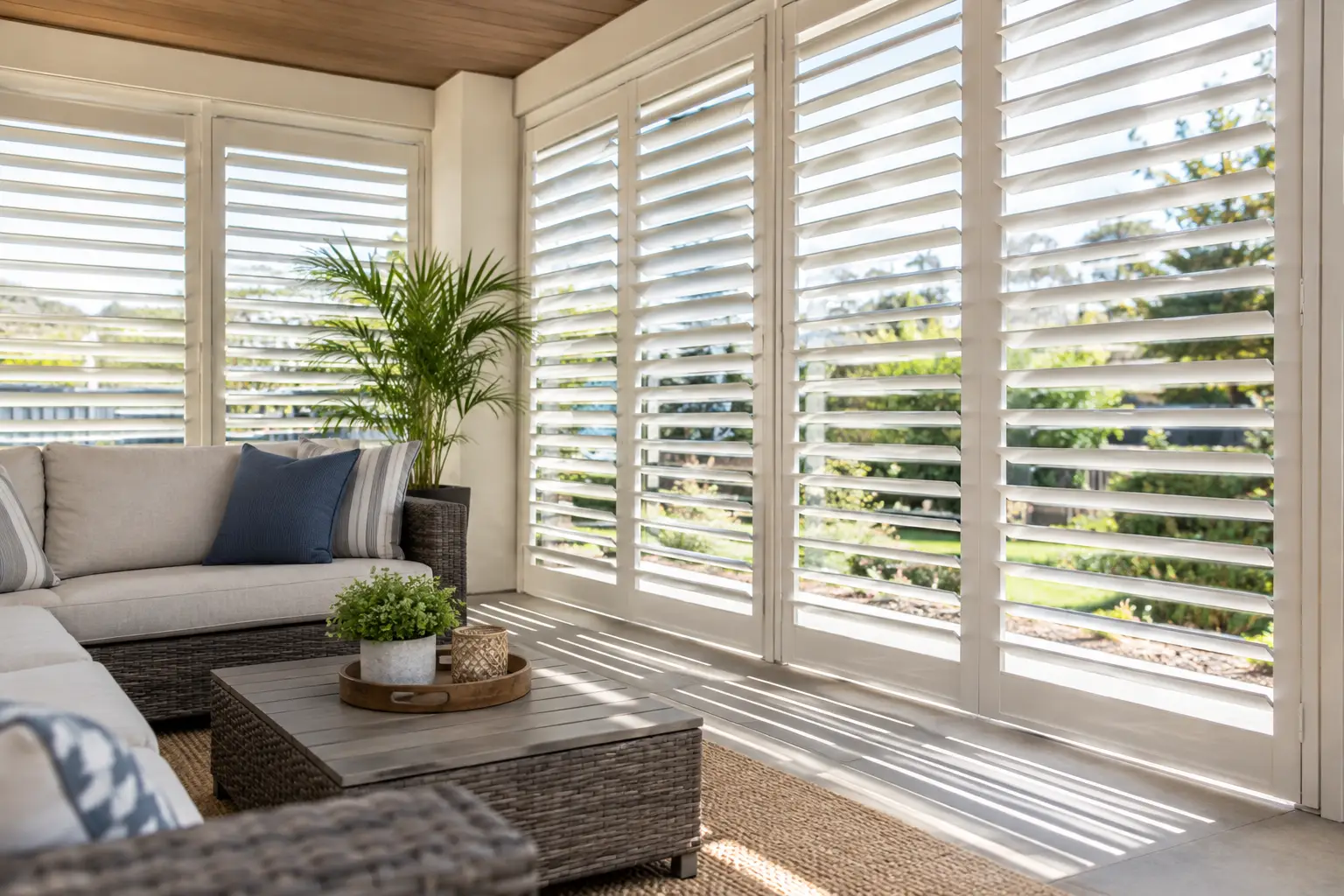
Patio Shutters for Privacy and Light Control

A patio door can be the brightest feature in a room - and the hardest window area to dress well. It may bring welcome daylight into a kitchen, dining room or living space, but it can also leave you feeling exposed after dark, create glare on sunny afternoons and make the room feel unfinished. Made-to-measure patio shutters offer a more permanent answer, giving you privacy and control without hiding the character of the opening.
For homes with French doors, sliding patio doors or wide glazed openings, the right shutters should do more than look smart. They need to suit the way the doors open, fit the space precisely and stand up to everyday use. That is where thoughtful advice and professional fitting make a real difference.
Why patio shutters work so well around doors
Patio shutters bring structure to a large glazed area. Rather than adding another soft furnishing around the door, they create clean architectural lines that can make the whole room feel considered. They work especially well in homes where the patio doors are a focal point, or where the same room needs to feel open during the day and more private in the evening.
The practical benefit is in the adjustable louvres. Tilt them to soften direct sunlight while keeping natural light in the room, angle them to reduce overlooking from neighbouring properties, or close them when you want a more private, enclosed feel. This flexibility is particularly useful in open-plan kitchens and family rooms, where the level of light needed can change throughout the day.
Unlike a one-size-fits-all window covering, shutters are configured around the opening itself. Panels can be designed to follow the layout of the doors, so access to the garden remains straightforward. When properly measured and fitted, they become part of the room rather than an afterthought.
Choosing patio shutters for the way you live
The best style depends on the door type, how often it is used and the look you want to create. There is no single arrangement that suits every patio opening, which is why an in-home consultation is so valuable.
French doors
French doors are often well suited to individual shutter panels fixed to each door. This keeps the shutters aligned with the doors as they open, allowing you to move outside without having to fold back panels first. The finished look is neat and balanced, particularly in period homes or extensions where symmetry matters.
A mid-rail can be a sensible addition. It lets you close the lower louvres for privacy while leaving the upper section open to bring in daylight. For a dining room overlooking a garden path, for example, this can be a useful everyday setting.
Sliding patio doors
Sliding doors usually call for a tracked shutter system, with panels that move smoothly to one side when access is required. The key is planning the panel layout around the direction in which the doors slide. A well-designed solution should not obstruct handles, restrict the opening or become cumbersome when you are carrying food outside on a summer evening.
Tracked shutters can also suit wide expanses of glass, including modern extensions and garden rooms. They offer a tailored alternative to leaving a large opening visually bare, while retaining the clean, contemporary feel that makes these spaces appealing.
Wide windows beside patio doors
Many homes have a patio door with a nearby window, particularly in older properties that have been extended over time. Matching shutters across both openings can make the room feel more cohesive. The proportions will not always be identical, but consistent louvre sizes, panel styles and colours help the whole elevation read as one considered design.
This is a detail worth discussing during the measuring appointment. What works beautifully on the doors may need a slightly different configuration on the neighbouring window, yet the overall result can still be harmonious.
Light control without losing the room’s character
A common concern is whether shutters will make a patio room darker. In practice, it comes down to louvre size, colour, the direction the room faces and how the shutters are used.
Larger louvres often suit broad patio openings because they keep the view feeling more open when tilted back. They can also complement contemporary doors with wider frames and uncluttered glazing. Smaller louvres may be preferable where you want a more traditional appearance or greater privacy from close-by neighbours.
White and soft neutral finishes reflect light and sit easily alongside changing décor. They are a reliable choice for kitchens, conservatories and living areas. Darker shades can be striking in the right setting, especially against pale walls or within a more dramatic scheme, but they can have a stronger visual presence. It is worth considering the shutters as part of the room’s wider palette, not simply as a solution for the glass.
Remember, patio shutters are not only for summer. During darker months, the louvres can be adjusted to make the most of available daylight while providing privacy from the street or garden. That year-round versatility is one reason they remain a popular improvement for busy family spaces.
Materials matter in kitchens and garden-facing rooms
Patio doors often sit near areas with changing temperatures, moisture and frequent use. A kitchen-diner with doors to the garden may deal with steam from cooking, muddy hands, pets and the occasional splash from a drink carried outside. The shutter material should reflect that reality.
For rooms where moisture resistance and easy cleaning are priorities, PVC shutters are an excellent option. They are durable, practical and well suited to kitchens, utility areas and rooms that open regularly onto the garden. A simple wipe-down is usually enough to keep them looking fresh, making them a sensible choice for households that want a polished finish without a high-maintenance routine.
Elsewhere, handcrafted shutter options can bring warmth and refined detail to the room. The right choice is not simply about appearance. It is about selecting a material that will continue to perform well in its environment and feel right for your home.
The details that make fitting feel effortless
The difference between a good-looking shutter and a truly successful installation is usually found in the details. Door handles need clearance. Frames must sit neatly without affecting opening and closing. Panels should line up accurately, and tracked systems need to move smoothly and confidently.
This is why measuring should never be rushed, particularly on older properties where walls, frames and floors may not be perfectly square. A made-to-measure service accounts for those small variations instead of expecting the opening to conform to a standard size.
At The North East Shutter Company, each project starts with understanding how the room is used as well as taking precise measurements. For homeowners in Newcastle, Sunderland, Northumberland and North Shields, local advice can be especially helpful when planning a renovation, extension or whole-home shutter project. Professional fitting brings the design together, so the shutters look as though they have always belonged there.
Questions to consider before requesting a quote
Before choosing a style, think about how you use the doors from day to day. Are they mainly a source of light, a regular route to the garden, or both? Do you need privacy from a neighbouring property? Is the room prone to glare at certain times of day? These answers will help shape the panel design, louvre size and material.
It is also useful to consider whether the patio doors are part of a larger scheme. If you are updating a kitchen, replacing flooring or decorating the adjoining living area, shutters can be selected to support the finished look rather than compete with it. Their timeless style gives them staying power, which makes them particularly worthwhile when you are investing in a room you plan to enjoy for years.
A precise survey and an honest conversation about the opening will always lead to a better result than choosing from photographs alone. The most effective patio shutters are the ones that make everyday living easier, look right from every angle and let your home feel open when you want it to be.


Comments