
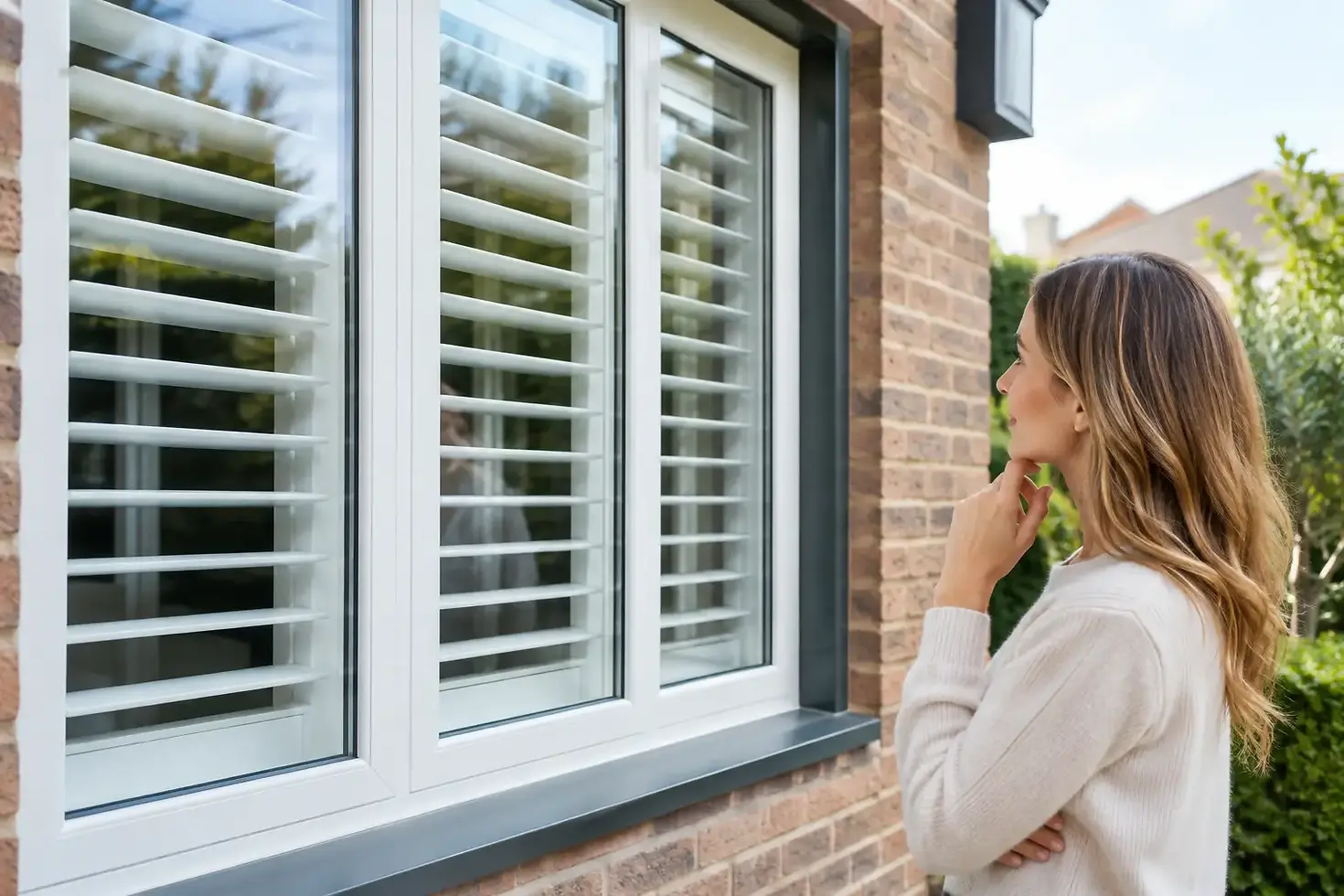
What British Shutter Quality Reviews Reveal

A photograph can make almost any new shutter look impressive. The more useful British shutter quality reviews describe what happens after fitting day: how accurately the panels meet, whether the finish suits the room, how the shutters feel in daily use and whether the service remains helpful when a question arises. Those details tell you far more about long-term value than a five-star score alone.
For homeowners choosing a permanent window treatment, quality is not one feature. It is the combination of considered design, suitable materials, precise measuring and fitting carried out with care. Get those elements right and shutters can bring privacy, gentle light control and a tailored finish to a room for years to come.
What British shutter quality reviews should tell you
The strongest reviews are specific. Rather than simply saying that shutters are lovely, they explain where they were fitted, what problem they solved and what the customer noticed once the job was complete. A comment about an awkward bay window, a kitchen that needed easy-clean surfaces or a bedroom that felt overlooked gives helpful context.
Look, too, for references to the process. Made-to-measure shutters rely on accurate surveying before they ever reach a window. Reviews that mention clear advice, careful measuring, punctual fitting and tidy workmanship are often a good indication that the finished result has not been left to chance.
It is also worth reading a spread of feedback rather than focusing only on the most recent comments. Consistent praise for communication, workmanship and the finished fit is more meaningful than a single flattering sentence. Equally, a business that responds calmly and constructively when an issue is raised shows the sort of accountability that matters with a fitted product.
A smart finish is only the starting point
Shutters are viewed close up every day. The details deserve attention: even gaps around the frame, panels that sit squarely, louvres that move smoothly and a finish that looks clean from different angles. These are practical signs of careful manufacture and installation, not superficial extras.
A well-fitted shutter should work with the character of the window rather than fight against it. This is particularly important in older North East homes, where bays, deep reveals and slightly irregular walls are common. A standard-sized product may appear acceptable at first glance, but it can leave inconsistent gaps or make opening the window less convenient. A properly measured solution is designed around the space available.
The choice of style affects the result as well. Full-height shutters can provide a crisp, balanced look in bedrooms and living rooms, while café-style shutters are often chosen where daytime privacy is needed without covering the upper part of the window. Tier-on-tier designs offer more flexibility, but they introduce additional panel lines and moving parts. There is no universally best option - the right choice depends on the room, the window and how you want to use the light.
Fit affects light, privacy and everyday use
Shutters are not expected to make a room completely black, as narrow lines of light can remain around panels and louvres. What quality fitting does provide is controlled, usable light. Neatly aligned panels and correctly positioned louvres allow you to soften glare, retain privacy and still keep a room feeling bright.
In a street-facing lounge or bathroom, small inaccuracies can be more noticeable because privacy is the priority. In a kitchen, the main test may be whether panels open comfortably for cleaning and ventilation. Good reviews often reveal this practical side of quality: shutters that look refined but also make the room easier to live in.
Material choice should match the room
British craftsmanship matters, but the best material is not always the same for every window. Timber brings natural warmth and can complement traditional interiors beautifully. It is often a strong choice for living rooms, bedrooms and spaces where the grain and painted finish form part of the design scheme.
PVC shutters are a sensible alternative in rooms exposed to moisture, heat and regular cleaning. In kitchens, bathrooms and utility spaces, a durable PVC solution can offer the tailored appearance of shutters with a surface designed for everyday demands. The benefit is not simply that it is easy to wipe down. A suitable material is less likely to become a source of concern in a hard-working room.
Reviews are most helpful when they explain why a particular option was recommended. A supplier should not push the same specification for every property. They should ask how the room is used, whether the window receives strong sun, how much privacy is required and what look you are hoping to achieve.
Craftsmanship is visible in the small details
Quality shutters involve more than the panels themselves. Frames, hinges, louvre mechanisms and fixings all need to work together. The difference may seem modest when new, yet it becomes clearer with repeated opening, closing and cleaning.
Ask whether the shutters have been made for the measured dimensions, rather than adjusted to approximate them. Consider how the panels will stack when open, where dividers will sit and whether handles or window openings need to be accommodated. These decisions affect the finished appearance and should be discussed before an order is placed.
A dependable installer will also be honest about limitations. Very large windows may require more panels or a divider rail for strength and stability. Deep recesses can influence the mounting position. Period windows may call for a solution that respects original features without preventing practical access. Straightforward advice is a quality marker in its own right.
Why professional fitting changes the result
Even a well-made shutter can disappoint if it is fitted carelessly. Surveying establishes the correct dimensions, but installation is where those dimensions become a finished feature in your home. Frames should be secure and square, panels should operate freely and the surrounding area should be left clean and respected.
Professional fitting also gives you someone to turn to after installation. You should be shown how to adjust the louvres, open the panels and care for the chosen finish. That handover is particularly valuable for whole-house projects, where different rooms may have different shutter styles and materials.
For homes in Newcastle, Sunderland, Northumberland and North Shields, a local specialist can make the process more straightforward. They can assess the windows in person, discuss the best configuration for each room and take responsibility for the result from survey through to fitting. The North East Shutter Company takes this consultative approach because a precise fit is central to both appearance and performance.
How to read reviews with a discerning eye
When comparing British shutter quality reviews, look for evidence rather than superlatives. The following signs usually point towards a considered service:
Customers mention accurate measuring and shutters that fit their windows closely.
Reviews refer to friendly, knowledgeable advice rather than pressure to make a quick decision.
Fitters are described as tidy, respectful and careful with the property.
Feedback mentions durability, smooth operation or continued satisfaction over time.
The supplier is praised for resolving questions clearly and keeping customers informed about delivery and fitting.
No company can control every aspect of a project, particularly where older windows present surprises. What matters is how clearly expectations are set and how any complication is handled. A two-week UK delivery can be attractive, for example, but it should sit alongside realistic timescales for survey, manufacture and fitting rather than become a promise made without context.
Value is measured long after installation day
The lowest initial price does not always represent the best value if the material is unsuitable, the fit is approximate or you are left to arrange alterations later. On the other hand, the most expensive option is not automatically right for every room. Value comes from selecting a shutter that suits the window, stands up to its environment and is fitted with precision.
A good quotation should make the proposed solution easy to understand. You should know which rooms are included, what style and material have been recommended, and what the fitting process involves. This gives you a fair basis for comparison and the confidence to make a decision without second-guessing the details.
The most reassuring review is often the one that describes a home feeling more finished: a bay window that has become a feature, a bedroom with better privacy, or a kitchen that feels brighter and more ordered. Choose the team that asks the right questions before measuring, because that care is usually what you will see every time you look at the finished shutters.


Comments