
Internal Shutters Versus Blinds for Your Home
- Steve Chisholm

- 2 days ago
- 6 min read
A bay window can be the feature that sells a room, but the wrong window covering can make it feel fussy, dark or unfinished. When weighing up internal shutters versus blinds, the best choice is not simply about appearance. It comes down to how you use the room, how much privacy you need and whether you want a short-term furnishing or a lasting improvement to your home.
Both options can soften daylight and improve privacy, and both are available in a wide range of finishes. The difference is in how they perform day after day. Blinds are generally a familiar, flexible choice, while made-to-measure shutters offer a more permanent, tailored finish with precise control over light and privacy.
Internal shutters versus blinds: the key differences
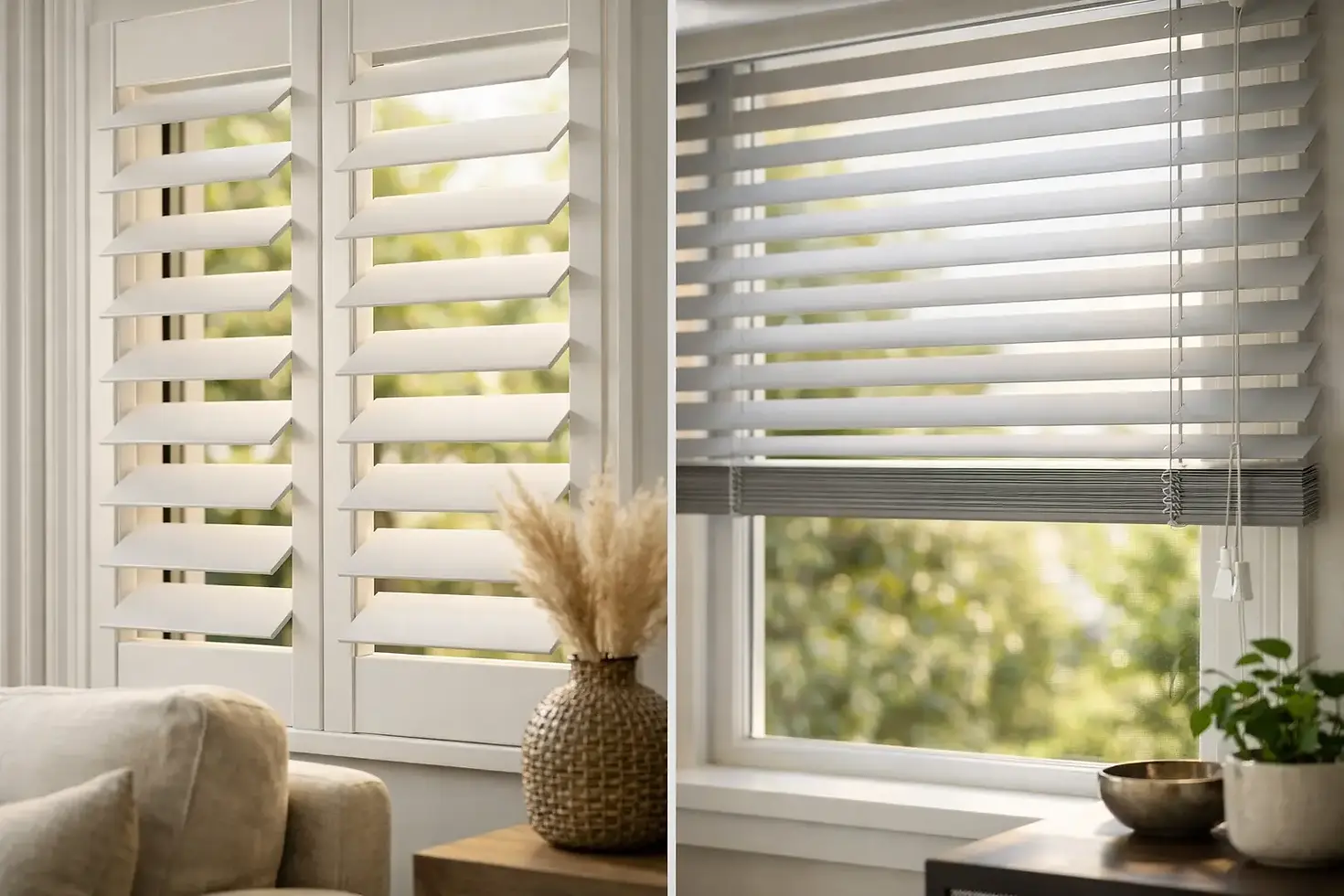
Internal shutters are fitted within or around the window recess and are made from solid panels with adjustable louvres. They become part of the room's design, particularly when measured carefully around a bay, sash window or unusual opening. Depending on the style chosen, they can cover the full height of the window or only the lower section.
Blinds are fabric, aluminium, wood or vinyl coverings that sit above or within the window. Roller, Venetian, vertical and Roman blinds all work differently, but most operate by raising, lowering or tilting the covering. They are widely available and can be a practical way to dress a window quickly.
The choice often becomes clearer when you compare the things that matter most in a lived-in home: control, maintenance, durability, style and cost over time.
Light control and privacy
Blinds can reduce glare effectively, particularly blackout roller blinds in bedrooms or simple Venetians in an office. However, many blind styles ask you to choose between having them open for daylight and closed for privacy. With some fabrics, the room can feel exposed once the blind is raised.
Shutters give you more subtle options. Tilt the louvres to redirect sunlight away from a television or worktop while still allowing natural light into the room. Angle them upwards to maintain privacy from the street without shutting out the day. In a terraced home, a ground-floor front room or a bathroom, that level of adjustment can make a real difference.
Tier-on-tier shutters are especially useful where privacy and daylight are both priorities. The lower panels can remain closed while the upper panels are opened independently. Café-style shutters offer a similar benefit for rooms that are overlooked, covering the lower portion of the window while leaving the top clear.
Style and fit
A blind can add colour, pattern or softness, which may be exactly right in a bedroom or a room with a more layered decorative scheme. They can also suit compact windows where a simple, unobtrusive treatment is wanted.
Yet blinds are often treated as an accessory. Internal shutters tend to feel more architectural. Their clean lines frame the glass and draw attention to the proportions of the window, rather than competing with it. This is why they work particularly well in Victorian and Edwardian bay windows, contemporary kitchens and homes where a calmer, more considered look is the aim.
The quality of the fit matters here. A ready-made blind may suit a standard-sized window, but it can leave awkward gaps at the sides or struggle with angles and handles. Made-to-measure shutters are configured around the actual opening, including bays, shaped windows and larger glazed areas. The result is a neater finish that looks intentional from both inside and outside the property.
Which lasts longer: shutters or blinds?
This is one of the strongest arguments for looking beyond the initial price. A well-chosen blind can provide good service, but cords, mechanisms, fabrics and slats are all subject to wear. Sunlight may fade material, moisture can affect some finishes, and everyday handling can lead to bent slats or damaged fittings.
Quality interior shutters are designed as a durable part of the home. Their panels and louvres are made for regular adjustment, and a professional installation helps ensure they open, close and sit correctly from the start. For busy family homes, rental properties and commercial settings, that solid construction can be reassuring.
Material should match the room. Hardwood shutters bring natural character and a traditional finish to living rooms and bedrooms. PVC shutter solutions are a practical choice for kitchens, bathrooms and other areas where humidity, splashes and easy cleaning are considerations. They offer the crisp appearance of shutters without the concern that can come with fabric or untreated timber in damp conditions.
No window treatment is completely maintenance-free, but shutters are straightforward to look after. A regular dust with a soft cloth or duster is usually enough, with a lightly damp cloth for more stubborn marks where appropriate. Blinds can take longer to clean, especially fabric folds, narrow Venetian slats or vertical louvres that collect dust over time.
Cost: initial spend versus long-term value
Blinds usually have the lower upfront cost. For a first home, a temporary solution or a room that is due for major renovation, they can be the sensible route. There is also a very broad selection at different price points, allowing homeowners to make a quick visual change without a large investment.
Shutters cost more because they are individually measured, manufactured and fitted. That price reflects the material, workmanship and time needed to achieve a precise result. It also reflects the fact that shutters are intended to stay in place for years rather than be replaced when a cord snaps, a fabric fades or a new decorating scheme begins.
For many homeowners, value is not only about the purchase price. It is about whether the treatment improves a room every day, holds its appearance and complements the property if they later decide to sell. Elegant shutters are widely seen as a desirable fitted feature, particularly across period homes and well-presented family properties.
There is no need to fit every window at once. It can be sensible to start with the rooms where the benefits are most immediate: a prominent bay, a street-facing lounge, a bathroom or a kitchen. Once you have lived with the improved privacy and light control, planning the next room becomes much easier.
Choosing for each room
The room should guide the decision rather than a single rule for the whole house. In bedrooms, blackout blinds can be useful for those who need near-darkness, while shutters offer privacy, style and excellent daylight management. Some homeowners combine shutters with curtains or a blackout blind where both the tailored look and maximum darkness are wanted.
In kitchens and bathrooms, moisture-resistant PVC shutters are often more practical than fabric blinds. They are easy to wipe down and give the room a polished, uncluttered feel. For lounges, shutters are particularly effective on bays and large front windows, where they can reduce overlooking without losing the benefit of daylight.
For home offices, adjustable louvres can help manage glare across screens throughout the day. In commercial premises, durable shutters can also create a professional appearance while giving staff and customers more control over privacy and sunlight.
When blinds may be the better choice
Shutters are not automatically the answer for every window. If you are renting, planning a major refurbishment soon or working to a tight immediate budget, blinds may offer the right balance of function and affordability. They are also useful when a bold pattern, rich texture or soft drape is central to the look of the room.
Very small windows, roof windows and certain doors may call for a different treatment, depending on access, handles and how often they are used. An experienced survey is valuable because it considers these practical details before anything is ordered.
The benefit of professional measuring and fitting
The appearance and performance of shutters depend on accuracy. Windows are rarely perfectly square, and bay windows need particularly careful measuring to ensure panels line up neatly and open as they should. This is where professional advice can prevent expensive compromises.
A local specialist can assess the shape of the window, discuss how you use the space and recommend a shutter style and material that suits the property. At The North East Shutter Company, every project is approached around the individual window and the finish the homeowner wants to achieve, backed by expert British craftsmanship and precise fitting.
If you are drawn to the versatility and lower starting cost of blinds, they remain a practical option. But if you want a durable, made-to-measure feature that gives your rooms greater privacy, controlled light and timeless style, internal shutters are often the choice that continues to feel right long after the room is finished. A conversation at your window, with your priorities in mind, is the best place to start.


Comments